Country/Region/City
Each FISU World University Championship is more than just a sporting event — it’s a unique opportunity to discover a new culture, explore a region, and connect with a vibrant academic community.
This page introduces you to the host country and city for this edition, highlighting their history, key features, and commitment to sport and youth.
China
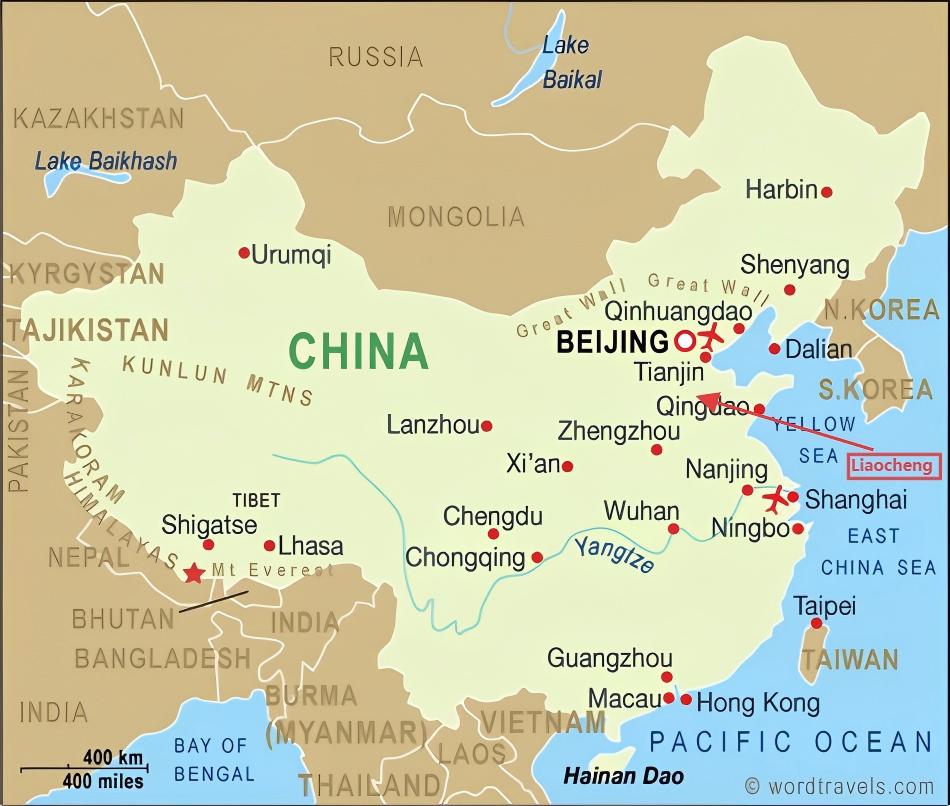
The People’s Republic of China (PRC), commonly known as China, is situated in East Asia, along the western coast of the Pacific Ocean. It is a socialist country under the people’s democratic dictatorship led by the working class and founded on the alliance of workers and peasants. With a land area of approximately 9.6 million square kilometers, China has a land boundary of more than 22,000 kilometers and a coastline exceeding 18,000 kilometers. It shares land borders with 14 countries and maritime boundaries with 6 countries, ranking as the third largest country in the world by land area and the most populous nation.
China is one of the world’s four major ancient civilizations, with a civilization history of more than 5,000 years. World cultural heritage sites such as the Great Wall and the Forbidden City are testimonies to its profound historical heritage. As the world’s second-largest economy, China has ranked first in the world in manufacturing scale for 15 consecutive years.
China has always adhered to an independent foreign policy of peace and is a permanent member of the United Nations Security Council, actively promoting the building of a community with a shared future for mankind. Currently, China is advancing Chinese-style modernization, committed to realizing the Chinese Dream of the great rejuvenation of the Chinese nation and contributing Chinese wisdom and strength to world peace and development.
Liaocheng
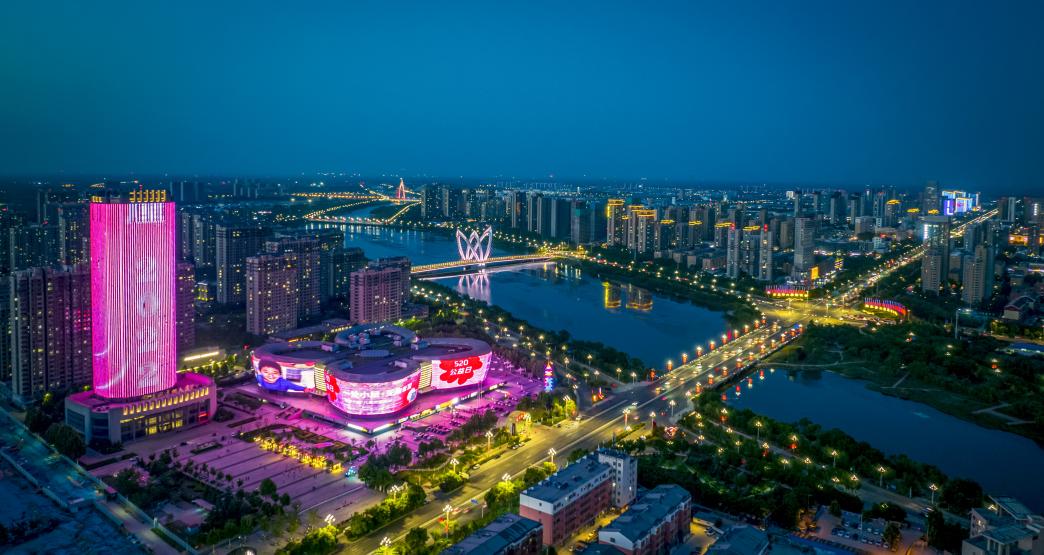
Liaocheng, a prefecture-level city in Shandong Province, is situated in the western part of the province, at the confluence of the Yellow River and the Grand Canal. It serves as a significant node connecting the Central Plains Economic Zone and the Bohai Rim Economic Circle. Covering an area of 8,628 square kilometers, the city had a resident population of 5.8034 million by the end of 2024. It administers eight counties, districts, and cities, along with one national-level economic and technological development zone, one high-tech industrial development zone, and one tourism and vacation zone.
Liaocheng is renowned as the “Water City North of the Yangtze River” and the “Pearl of the Two Rivers.” It has been designated as a National Historical and Cultural City, a National Civilized City, an Excellent Tourism City of China, a National Sanitary City, a Model National Environmental Protection City, a National Garden City, a National Forest City, and a Model City for Supporting the Military.
Located at the intersection of national development strategies such as the coordinated development of the Beijing-Tianjin-Hebei region and the Central Plains Economic Zone, Liaocheng benefits from a robust transportation network. The city is a pivotal junction where the Beijing–Kowloon and Handan–Jinan railways converge, and is served by the Jinan–Liaocheng and Dezhou–Shangqiu expressways, facilitating efficient connectivity. Liaocheng is actively advancing its goal of becoming a regional center city at the junction of Hebei, Shandong, and Henan provinces.
The city is committed to promoting new urbanization and rural revitalization, accelerating the transformation of old and new growth drivers, and striving to build a model city for ecological protection and high-quality development in the Yellow River Basin. Through these efforts, Liaocheng aims to contribute to the construction of a modern socialist country in the new era.
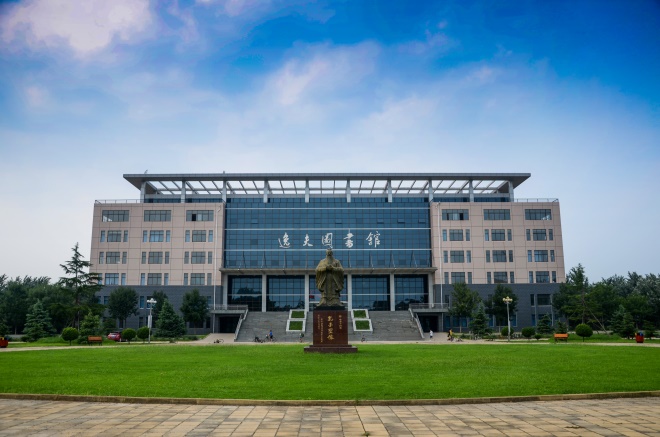
Liaocheng University
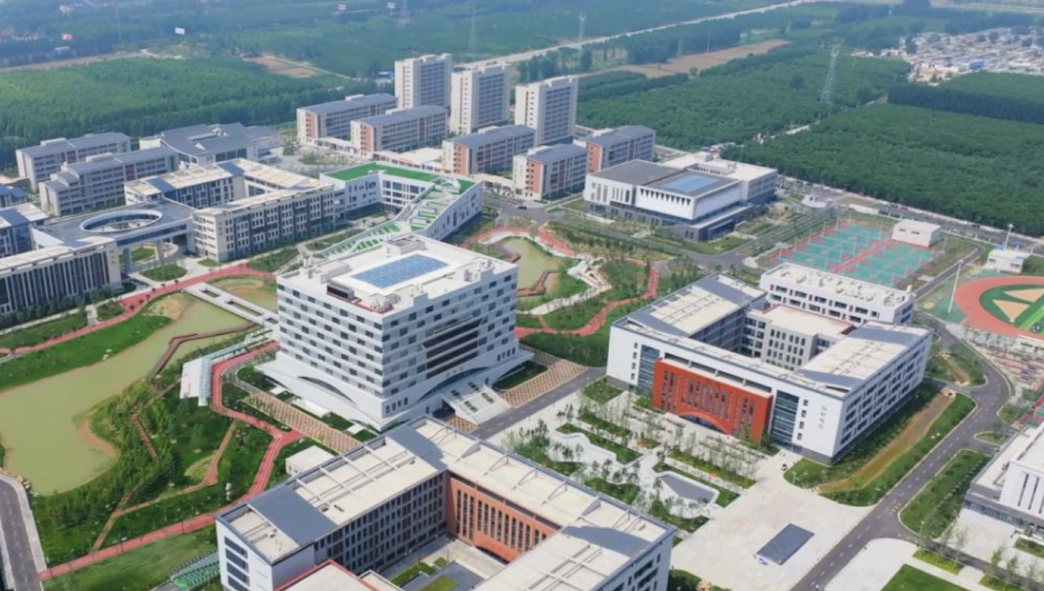
Liaocheng University is a key comprehensive university under the administration of Shandong Province, located in Liaocheng, a nationally recognized historical and cultural city in Shandong Province, China.
Established in 1974 as the Liaocheng Branch of Shandong Normal College, the institution developed through the phase of Liaocheng Normal College and, in 2002, was officially renamed Liaocheng University with the approval of the Ministry of Education. In 2023, the university was selected for Shandong Province’s “Strive for Excellence” initiative. It is an institution authorized by the Ministry of Education to confer bachelor’s and master’s degrees, and is among Shandong Province’s first batch of universities recognized for the cultivation of applied talents with distinctive characteristics.
Liaocheng University currently operates two campuses—East and West—covering a combined area of approximately 3,000 mu (about 200 hectares). with the total building area exceeding 1.15 million square meters. The university comprises 25 colleges, encompassing nine major disciplinary categories: humanities, science, engineering, economics, management, law, education, arts, and agriculture. It offers 68 undergraduate programs, one doctoral program serving the country’s special talent needs, 26 first-level master’s degree authorization points, and 21 professional master’s degree categories. Notably, the disciplines of Chemistry, Engineering, and Materials Science have consistently ranked within the top 1% globally according to the Essential Science Indicators (ESI), forming a comprehensive and well-coordinated multidisciplinary academic system.
The University adheres to an open approach to higher education and actively promotes internationalization. It has established friendly cooperative relationships with more than 120 universities across over 40 countries and regions, regularly conducting faculty and student exchanges, joint programs, and academic collaborations. Currently, the university hosts over 400 full-time international students from more than 50 countries. In recent years, the university has secured more than 300 projects funded by the National Natural Science Foundation and the Social Science Foundation, and has received over 100 provincial- and ministerial-level research awards, including the National Science and Technology Progress Award and the Ministry of Education’s Outstanding Achievement Award in Humanities and Social Sciences. Its research and innovation capacity consistently ranks among the top of Shandong provincial universities.
Looking ahead, Liaocheng University is moving forward with vigor to accelerate the development of a high-level, comprehensive university with distinctive characteristics and national recognition. The university is committed to contributing knowledge and expertise to regional development and global educational cooperation, and warmly welcomes outstanding talents from home and abroad to pursue studies, exchanges, and collaborations.
Liaocheng University Dongchang College
Liaocheng University Dongchang College is a full-time undergraduate institution of applied technology established with the approval of the Ministry of Education of the People’s Republic of China. It is a designated construction unit of applied undergraduate universities in Shandong Province and a pilot unit for Smart Education demonstration in the province. The college has been consecutively honored as a “Provincial Garden Unit of Shandong,” “Advanced Unit for Ancient Books Preservation in Shandong,” “Base for the Inheritance of Excellent Chinese Traditional Culture in Shandong,” and “University with the Best Social Reputation in Shandong.” In 2019 and 2020, it was consecutively ranked among the high-level independent colleges in China by Wu Shulian, and in 2022 it was included in the third batch of Shandong Province’s applied undergraduate universities construction support list.
The campus covers an area of 1,013 mu (≈67.5 hectares) with a building area of 338,000 m². The total value of teaching and research instruments and equipment is RMB 119 million. The college has established 2 practical training centers, 135 laboratories and training rooms, and 17 on-campus entrepreneurship incubation rooms. The library, one of the first CALIS member libraries in China, houses 759,000 volumes.
The college comprises 12 teaching departments, offering 34 undergraduate programs and 10 specialized programs across disciplines including science, engineering, literature, economics, education, and arts. Its academic structure emphasizes engineering while fostering coordinated multidisciplinary development. It has 1 provincial-level first-class undergraduate program, 4 industry-university co-built programs, and 1 university-level modern industrial college. Currently, the college enrolls over 9,610 students and employs 538 full-time faculty members, of whom 82.08% hold master’s or doctoral degrees. The faculty includes 2 recipients of the “Outstanding Teacher of Shandong Province,” 18 “Outstanding Teachers of Liaocheng,” and 3 mid-to-young scholars with outstanding contributions in Liaocheng. Over the past five years, faculty members have published 45 academic monographs and textbooks and 651 research papers. They are dedicated to teaching and scholarly research, earning more than 30 awards in provincial and higher-level teaching competitions.
Liaocheng University Dongchang College maintains a vibrant international exchange environment. It has established academic cooperation and student exchange programs with over ten universities in countries such as South Korea and Australia, sending 819 students abroad in 37 cohorts. The college has long-term stable partnerships with well-known overseas universities, including Cheongju University and Soongsil University in South Korea, Belarusian State University and Belarusian National Technical University, Ming Chuan University in Taiwan, and University of Bialystok in Poland. In addition, each year the college selects outstanding students to serve as international volunteers for Chinese language education in Thailand, contributing to the international promotion of Chinese culture.